ISO 9001 Certified|Global Shipping|Wholesale & OEM Supply
B2B filling-line label program
Machine-Ready Roll Labels for Automatic Filling and Labeling Lines
A label that looks right can still stop a production line. Qualify the applicator, roll construction, sensor method, target speed, container condition and application position before quotation and approve the first roll on the intended setup.
Applicator-specific reviewControlled roll specificationPrinted and blank routesFirst-roll trial planning
The product series defines how labels are printed, sensed, dispensed and changed on the line. Final material, adhesive and roll construction are confirmed against the actual applicator and container.
Product type narrows the operating risk. Container geometry, filling sequence, surface condition, exposure and target speed still need project-specific confirmation.
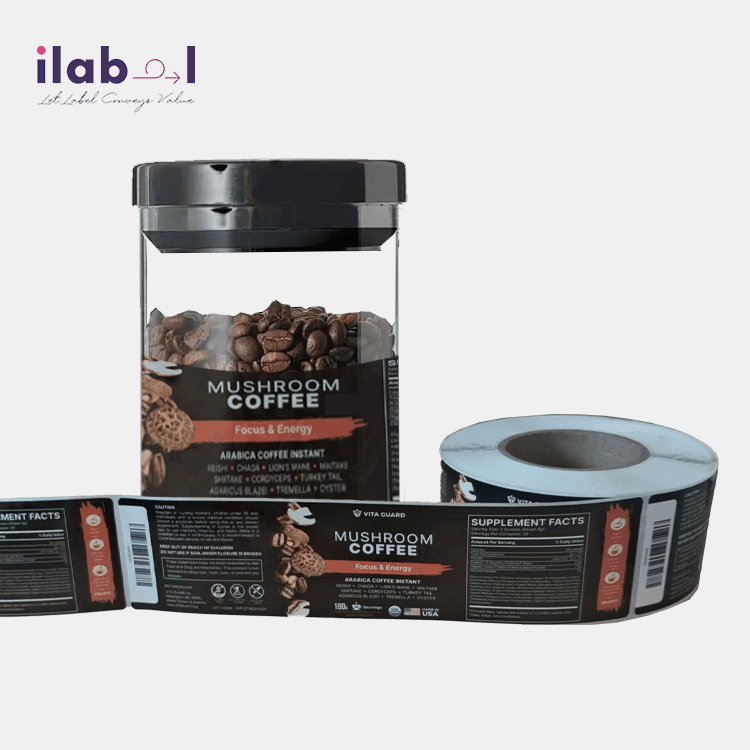
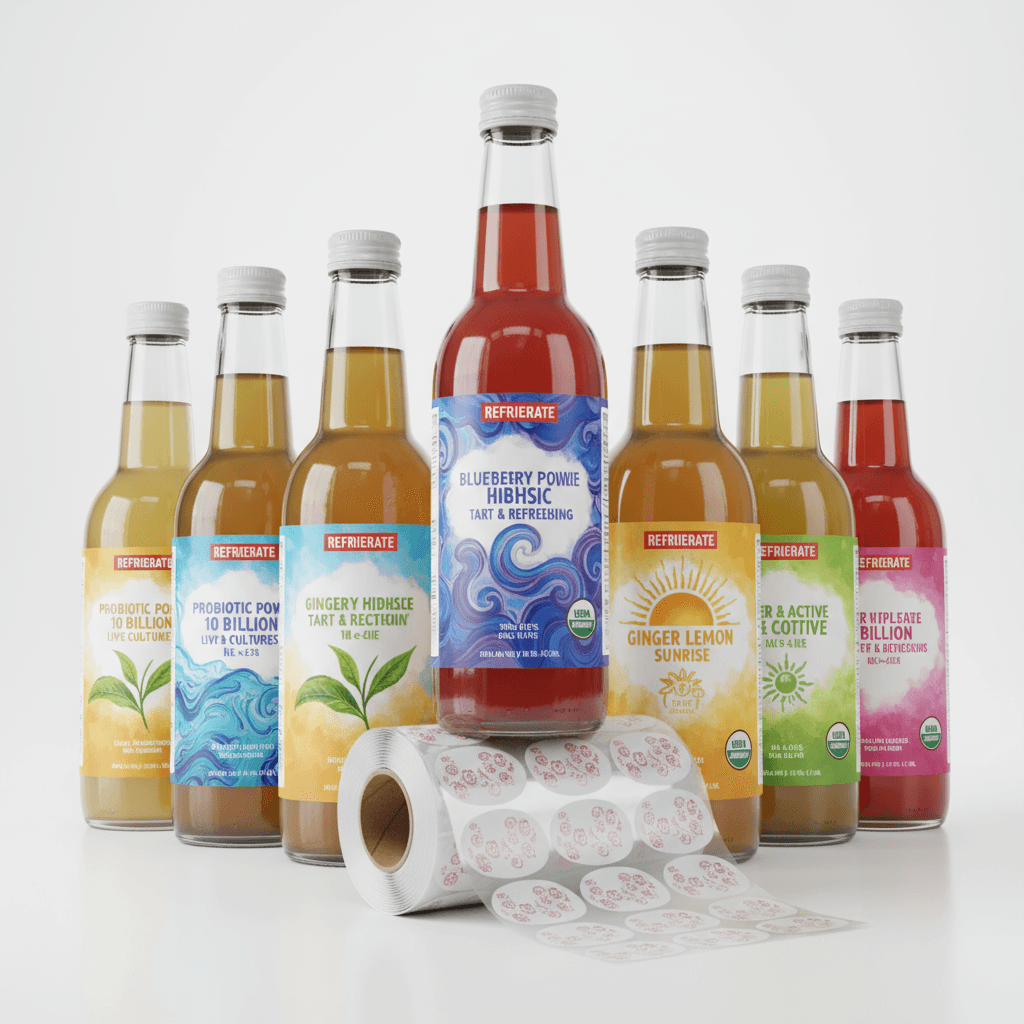
Beverage bottling lines
Roll labels for water, juice, tea, coffee and other beverage containers applied on controlled production lines.
Confirm: applicator, dry or wet bottle, empty or filled state, application temperature, condensation timing, line speed and label position
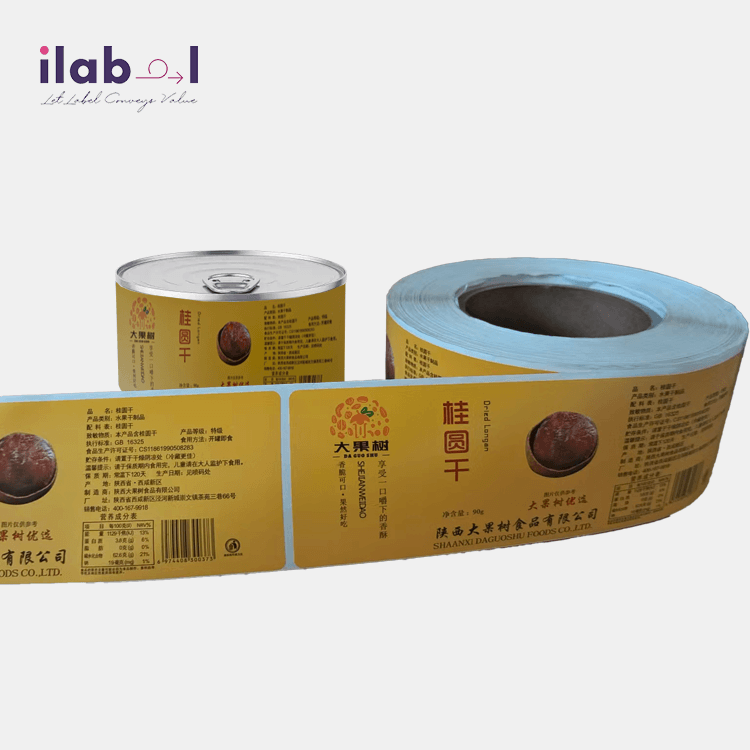
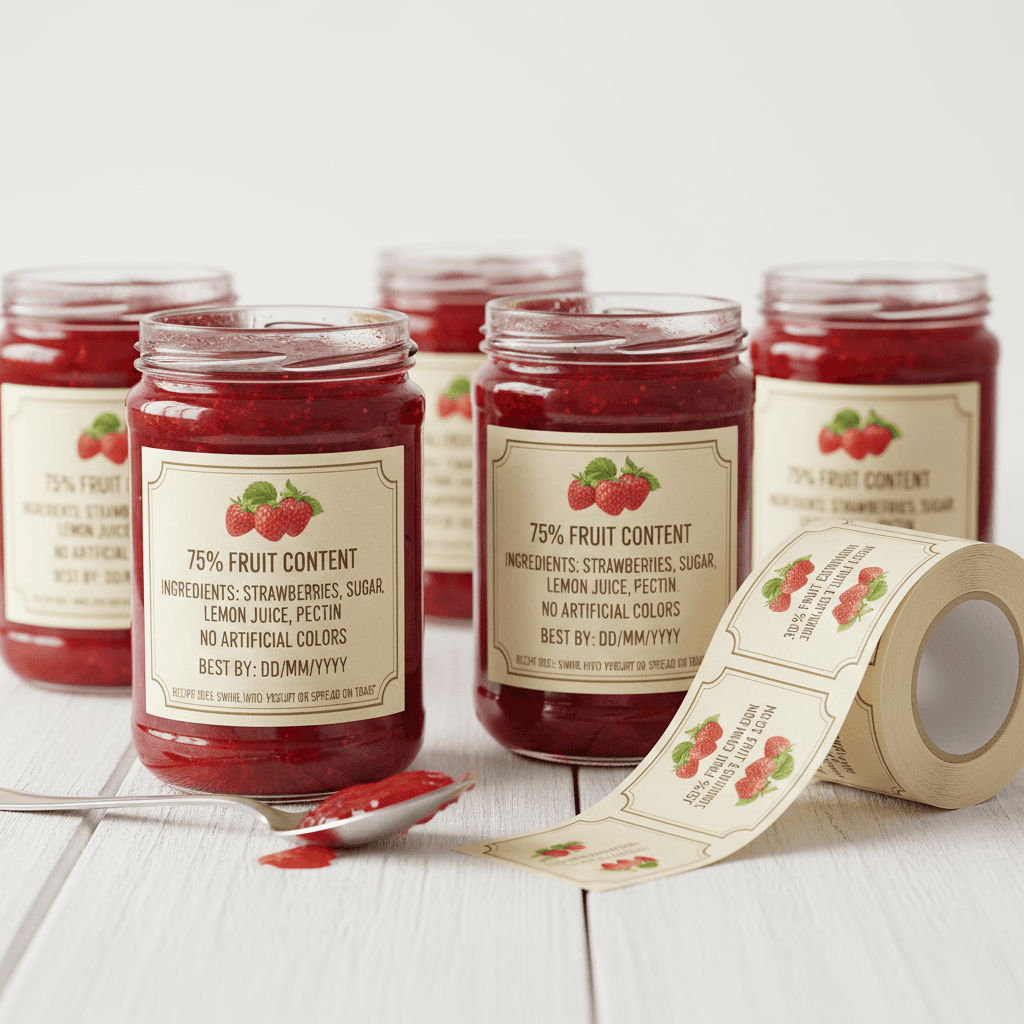
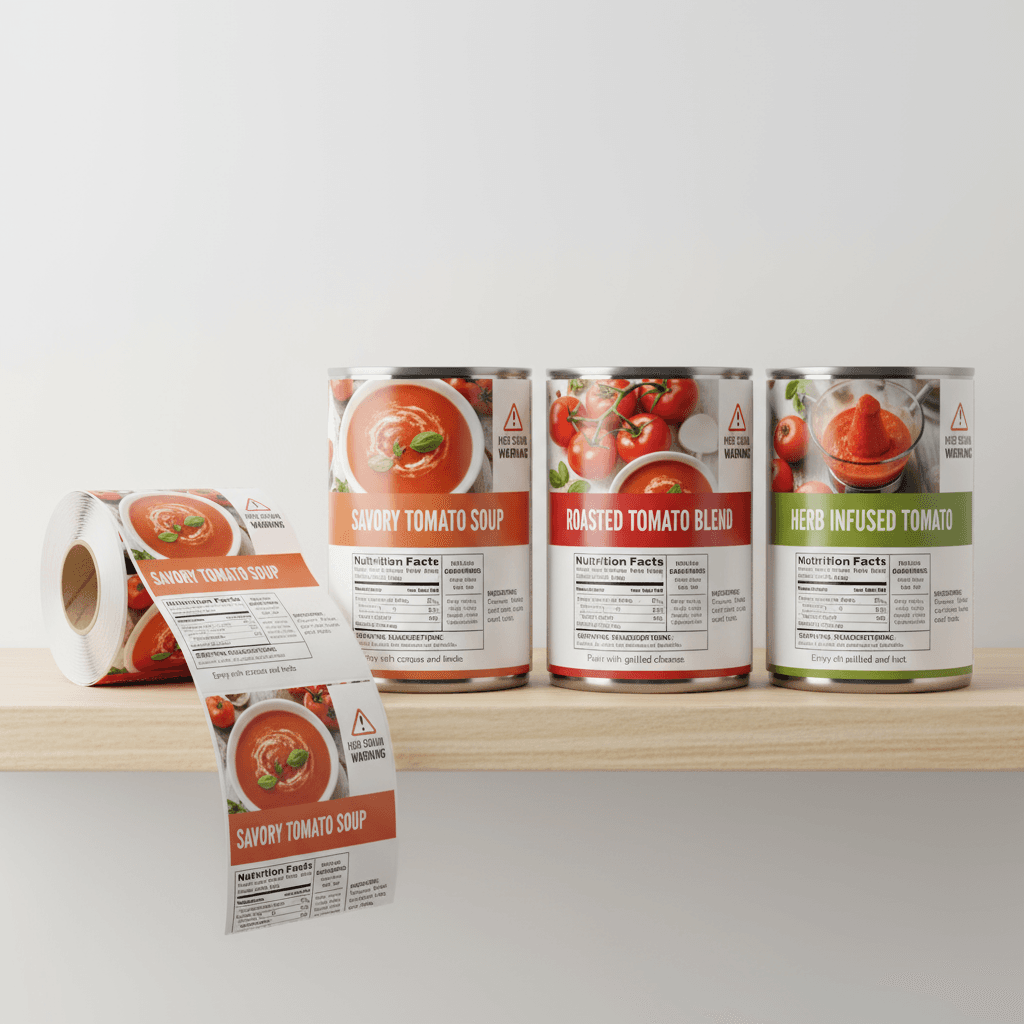
Machine-applied exterior labels for jars, bottles and rigid food containers with project-specific exposure review. Direct food contact is a separate scope.
Confirm: container material, filling temperature, surface contamination, oil or sauce contact, cleaning, storage and application position
Lock the machine specification before material approval
Applicator geometry, roll construction and container presentation determine which label construction is worth testing on the first roll.
01
Container and surface
Qualify adhesion and placement against the production container presented to the label head.
Container material, coating, shape, curvature and stiffness
Actual container dimensions and available label panel
Empty or filled; dry, wet, dusty or oily surface
Application position and overlap allowance
02
Filling, labeling and exposure
Define the production sequence and service conditions before selecting a construction.
Applicator brand, model, label head and sensor method
Target and start-up line speed
Filling, cooling, cleaning and handling sequence
Application, storage and expected exposure conditions
03
Material, adhesive and finish
Review each construction against the recorded container, process and exposure instead of assuming universal compatibility.
Paper, film or other face-stock preference
Adhesive matched to the surface and application temperature
Finish, print method and variable-data requirement
Core, roll diameter, web, unwind, gap, liner and packing
04
Artwork, roll and commercial
Use one approved specification from quotation through trial, production and reorders.
Artwork revision and quantity by SKU
Proof, sample and first-roll trial requirement
Acceptance criteria at target speed
Minimum order, requested delivery window and destination
Machine qualification
Approve the first roll on the recorded applicator and container
Applicator compatibility is a project-level result. Record the equipment, container, label construction, speed, continuous-run target and acceptance criteria instead of claiming one roll works on every machine.
Pre-installation check
Verify core, outer diameter, web width, unwind, liner, splice, label orientation and the approved artwork revision.
Low-speed setup
Confirm sensing, release, placement and initial adhesion before increasing production speed.
Target-speed run
Record tension, skew, liner breaks, wrinkles, bubbles, stops and waste during a defined continuous run.
Restart and approval
Check positioning and sensor recovery after stopping, then record final settings, adjustments, samples and approver.
Changing the applicator, container, label size, face stock, adhesive, liner, unwind, gap, speed or sensor may require a new trial. Compatibility applies only to the recorded setup and conditions.
Sourcing FAQ
Answers before the specification review
Use these answers to prepare the printer, application and order information needed for a useful quotation.
01What information is required for labels used on an automatic filling line?
Provide the applicator brand and model, label position, target speed, core ID, maximum roll OD, web width, unwind, gap or pitch, liner, sensor method, container condition, label size and artwork. Photos of the roll path and an existing approved roll are also useful.
02Why is unwind direction important?
The unwind direction determines which edge and artwork orientation reach the label head first. A wrong direction can place the label upside down, on the wrong panel or make the roll unusable without rewinding.
03How do core size and roll outer diameter affect the order?
The core must fit the unwind shaft and the completed roll must stay within the machine's available diameter and weight. These values also affect labels per roll, changeover frequency, packing and freight.
04What causes a labeling machine to miss or stop on a roll?
Common causes include an unsuitable gap or mark, transparent-label sensing, liner variation, excessive die-cut depth, wrong unwind, web-width mismatch, tension instability and container presentation. Diagnosis should use the recorded machine and roll setup.
05Can one roll-label construction work on every automatic applicator?
No. Passing one setup does not prove universal compatibility. Applicator, sensor, liner, speed, web path, container and application position can change the result, so new setups may require another first-roll trial.
06Can labels be applied to cold or wet bottles after filling?
That depends on the actual application temperature, water film, container material, adhesive and dwell time. Distinguish labels applied to a dry bottle before cooling from labels applied to a cold or wet bottle, then test the intended sequence.
07How are multiple SKUs controlled on a co-packer line?
Give each artwork a controlled revision and quantity. Roll labels, cartons, replacement records and obsolete-stock handling should use the same version code to reduce mixing during line changeovers.
08What should a first-roll trial record?
Record the equipment, container, roll construction, speed, run length, sensing, release, placement, adhesion, stops, waste, adjustments, final settings and approval result. The approved specification should then control production and reorders.
B2B filling-line label review
Send the machine, roll and container inputs
Send your product, size, quantity and destination through the contact page or WhatsApp.