The Complete Guide to
Thermal Paper OEM Manufacturing
Everything a distributor or brand owner needs to know about sourcing custom thermal paper rolls and labels, from MOQ and sampling to private-label packaging, quality control, and the most common sourcing pitfalls.
What Is Thermal Paper OEM Manufacturing?
OEM (Original Equipment Manufacturer) in the thermal paper industry means a factory produces rolls or labels to your exact specifications — your size, your coating formula, your packaging, your brand. You sell under your own label; we manufacture behind the scenes.
This model is used by distributors, office supply brands, retail chains, and logistics companies worldwide to build proprietary product lines without owning a factory. The global thermal paper market was valued at approximately USD 4.2 billion in 2023 and is projected to grow at a CAGR of 5.1% through 2030, driven by expanding e-commerce logistics, food delivery, and cashless payment adoption. For distributors, OEM manufacturing is the most efficient path to capturing margin in this growing market.
Unlike trading companies that resell generic stock, a true OEM partnership gives you product differentiation: your brand on the packaging, your specifications in the formulation, and your pricing power in the market. Retailers and end-users who reorder by brand name become loyal to your product, not to the underlying factory.
Step-by-Step OEM Process
Understanding the full OEM workflow before you begin prevents delays and miscommunication. A well-managed OEM project from inquiry to first delivery typically takes 25–35 days. Here is what each stage involves:
MOQ, Lead Times & Pricing
One of the most common questions from new OEM buyers is: "What is the minimum order quantity?" The answer depends on the complexity of your specification. Standard sizes with stock paper have lower MOQs; fully custom formulations require larger runs to justify setup costs.
| Parameter | Standard OEM | Premium OEM |
|---|---|---|
| MOQ (Rolls) | 1,000 rolls | 500 rolls |
| Sample Lead Time | 3–5 business days | 3–5 business days |
| Production Lead Time | 15–20 days | 20–25 days |
| Packaging Options | Shrink wrap, polybag | Custom box, display pack |
| Certifications | ISO 9001, BPA-Free | ISO 9001, BPA-Free, FSC |
| Private Label | Yes | Yes + design support |
Pricing is quoted per roll (FOB Shenzhen) and varies by paper weight, coating type, roll dimensions, and packaging complexity. As a reference, standard 80mm x 80mm rolls in shrink-wrap packaging at 5,000-roll quantities are typically priced 15–25% below major trading company rates when sourced directly from a factory with our scale.
Common OEM Customization Options
The range of customization available in modern thermal paper manufacturing is broader than most buyers realize. Beyond simple size changes, you can specify the chemistry of the coating, the feel of the paper, and every detail of the packaging presentation.
For markets with specific regulatory requirements — such as the EU's REACH regulation restricting bisphenol compounds, or California's Proposition 65 — we can provide phenol-free and BPA-free certified formulations with full third-party lab test reports. This is increasingly important for distributors supplying food service, healthcare, and government procurement channels.
How to Evaluate a Thermal Paper OEM Supplier
Choosing the wrong OEM partner is one of the most expensive mistakes a distributor can make. A bad batch of thermal paper that fades within months, or rolls that jam in your customers' printers, can destroy a distribution relationship built over years. Here is a systematic framework for evaluating suppliers before committing to a production order.
ISO 9001 certification is the baseline, but confirm that the certificate covers the specific product lines you are ordering. Some factories hold ISO 9001 for their administrative processes only, not their manufacturing lines. Request the certificate number and verify it on the issuing body's website (Bureau Veritas, SGS, TÜV Rheinland). For BPA-free claims, require a third-party lab test report (SGS or Intertek) dated within the past 12 months — not just a supplier declaration.
A legitimate factory will welcome a video tour or third-party audit. Look for: slitting machines with automatic tension control (critical for consistent roll diameter), climate-controlled storage for raw paper stock (humidity above 70% degrades thermal coating), and a dedicated QC lab with optical density meters and caliper gauges. If a supplier refuses any form of factory verification, treat this as a serious red flag.
Never approve samples tested only in ideal conditions. If your customers operate kitchen printers near fryers, test the sample at 40°C with grease exposure. If you supply outdoor kiosk operators, test at -10°C. Run the sample through 500 receipts continuously to check for jamming. Store a printed receipt in a wallet for 30 days alongside a credit card (plasticizer migration is a common cause of image fading). Only approve samples that pass all conditions relevant to your end-use environment.
The unit price per roll is only one component of your total sourcing cost. Factor in: freight (thermal paper is bulky and heavy — a 20-foot container holds approximately 800,000 standard 80mm rolls), import duties (HS code 4809.90 applies in most markets, with duty rates ranging from 0% in free trade agreement countries to 12% in some markets), warehousing costs, and the cost of customer complaints from substandard product. A supplier quoting 8% below market price but with inconsistent quality can easily cost you more than the savings in returns and lost accounts.
Regional Market Considerations for OEM Buyers
Thermal paper specifications are not universal. The dominant printer brands, paper sizes, and regulatory requirements vary significantly by region. Sourcing a product optimized for one market and selling it in another is a common and costly mistake.
| Region | Dominant Sizes | Key Printers | Regulatory Notes |
|---|---|---|---|
| North America | 2¼" × 50′, 3⅛" × 230′ | Epson, Star, Bixolon, Verifone | CA Prop 65, FDA 21 CFR 176.170 |
| Europe | 57mm × 40m, 80mm × 80m | Epson, Ingenico, PAX | REACH, BPA ban in receipts (2020) |
| Southeast Asia | 57mm × 50m, 80mm × 80m | SNBC, Sewoo, Bixolon | Varies by country; BPA-free preferred |
| Middle East | 80mm × 80m, 57mm × 50m | Epson, Star, Posiflex | Halal certification sometimes required |
| Latin America | 57mm × 40m, 80mm × 80m | Bematech, Epson, Elgin | INMETRO certification in Brazil |
When entering a new regional market, we recommend ordering a mixed sample set covering the two or three most common sizes in that market before committing to a large production run. Our sales team can advise on the specific printer models and paper specifications that dominate each market based on our existing distribution data.
Private Label Packaging: Building a Brand That Sells
Private label packaging is where OEM manufacturing transitions from a cost exercise to a brand-building strategy. The packaging of a thermal paper roll is the primary touchpoint between your brand and the end customer — a restaurant manager, a retail store owner, or a warehouse supervisor who reorders by brand name when they run out.
Effective thermal paper packaging communicates three things at a glance: the paper size (width × length × core diameter), the key quality claims (BPA-free, image life, compatibility), and the reorder information (your website, phone number, or QR code). Packaging that omits any of these elements loses reorder opportunities.
We offer four packaging formats: individual shrink wrap (lowest cost, suitable for bulk buyers), individual polybag with header card (retail-ready, allows hanging display), custom printed box (premium presentation, ideal for branded gift sets or hospitality supply), and display counter box (holds 10–50 rolls, designed for retail shelf placement). Each format has different MOQ implications and per-unit costs, which our team will detail in your quote.
For distributors building a long-term brand, we recommend investing in a custom printed box even if the initial volume does not justify the premium — the brand equity built with end customers who see your logo on every roll compounds over time into reorder loyalty that is difficult for competitors to displace.
Quality Assurance: What to Expect and Demand
Quality in thermal paper manufacturing is multidimensional. A roll can pass a visual inspection and still fail in the field due to coating inconsistency, dimensional variation, or chemical incompatibility with specific printer models. Here is what a rigorous QA process should include:
Every production batch ships with a Certificate of Conformance documenting the test results for that specific batch. For premium OEM customers, we also provide a retained sample from each batch, stored in our QC archive for 24 months, enabling traceability in the event of a field complaint.
Shipping, Logistics & Import Planning
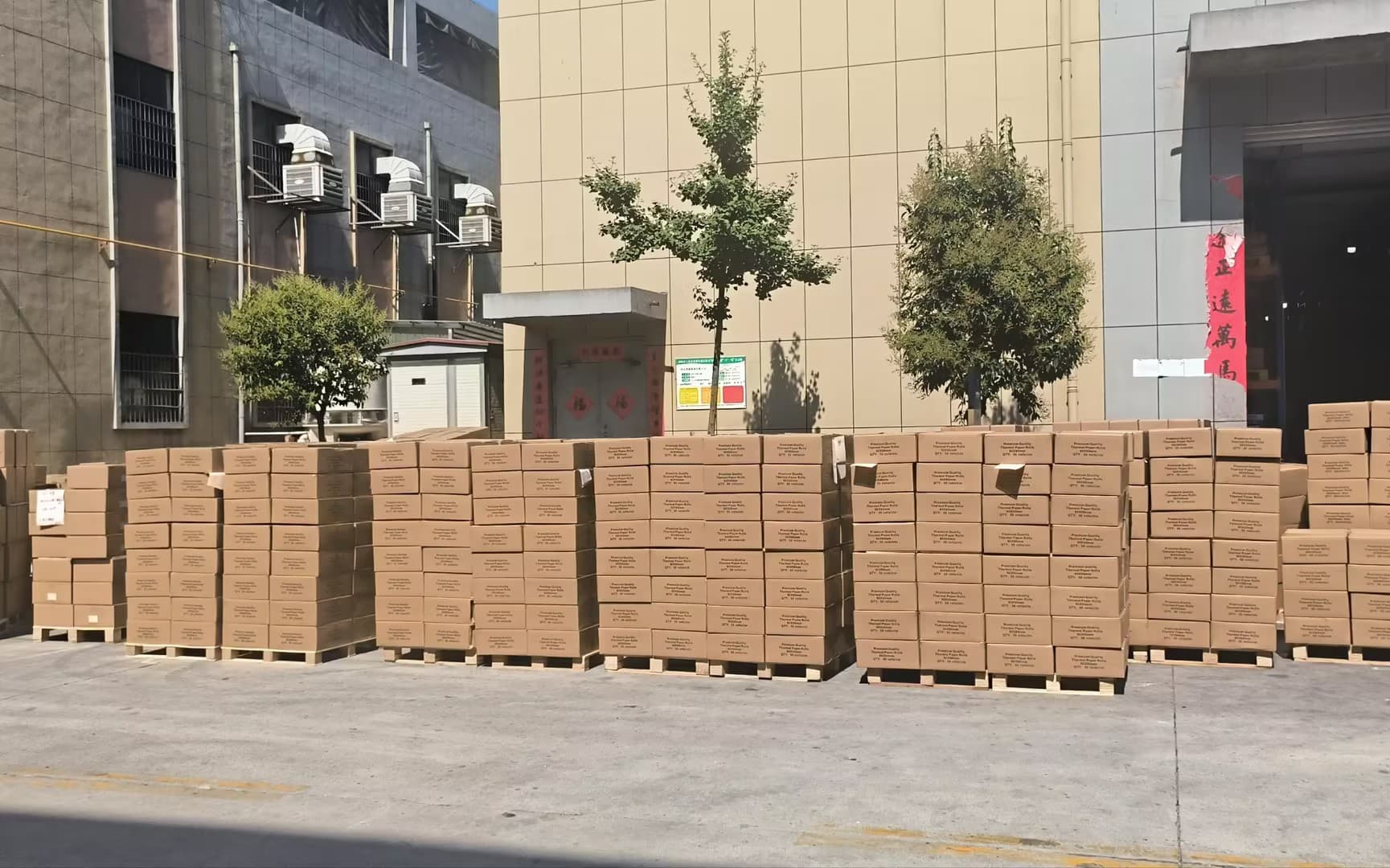
Thermal paper is classified as non-hazardous cargo and ships without special restrictions. However, its bulk-to-value ratio makes logistics planning critical to maintaining competitive landed costs. A 20-foot container can hold approximately 800,000 standard 80mm rolls (depending on packaging format), making full-container loads the most cost-efficient option for established distributors.
For new buyers or smaller initial orders, we consolidate shipments with other customers to offer LCL (Less than Container Load) rates. Transit times from our Guangdong facility are typically 18–22 days to European ports, 20–28 days to US East Coast ports, and 14–18 days to Southeast Asian ports.
EXW (factory gate), FOB (Shenzhen or Guangzhou port), CIF (cost + insurance + freight to destination port), DDP (delivered duty paid, including customs clearance). For first-time buyers, we recommend FOB as it gives you control over freight while keeping the factory responsible for export clearance.
Contact our OEM team with complete specifications, quantity, packaging, and destination details. We will confirm quotation and sample scope after review.
Start OEM PartnershipGet a Free Quote
Initial reply targeted within one business day after sufficient details are received
Share product, size, quantity and destination.
Related Resources
OEM & Private Label Articles
Distributor-focused content: MOQs, packaging, sampling, lead time, and quality control.
Thermal Paper Roll Specification Checklist for Middle East Importers
Use this RFQ checklist to compare thermal paper offers by dimensions, length, material, printing, packing, testing and delivery instead of headline price alone.
Read article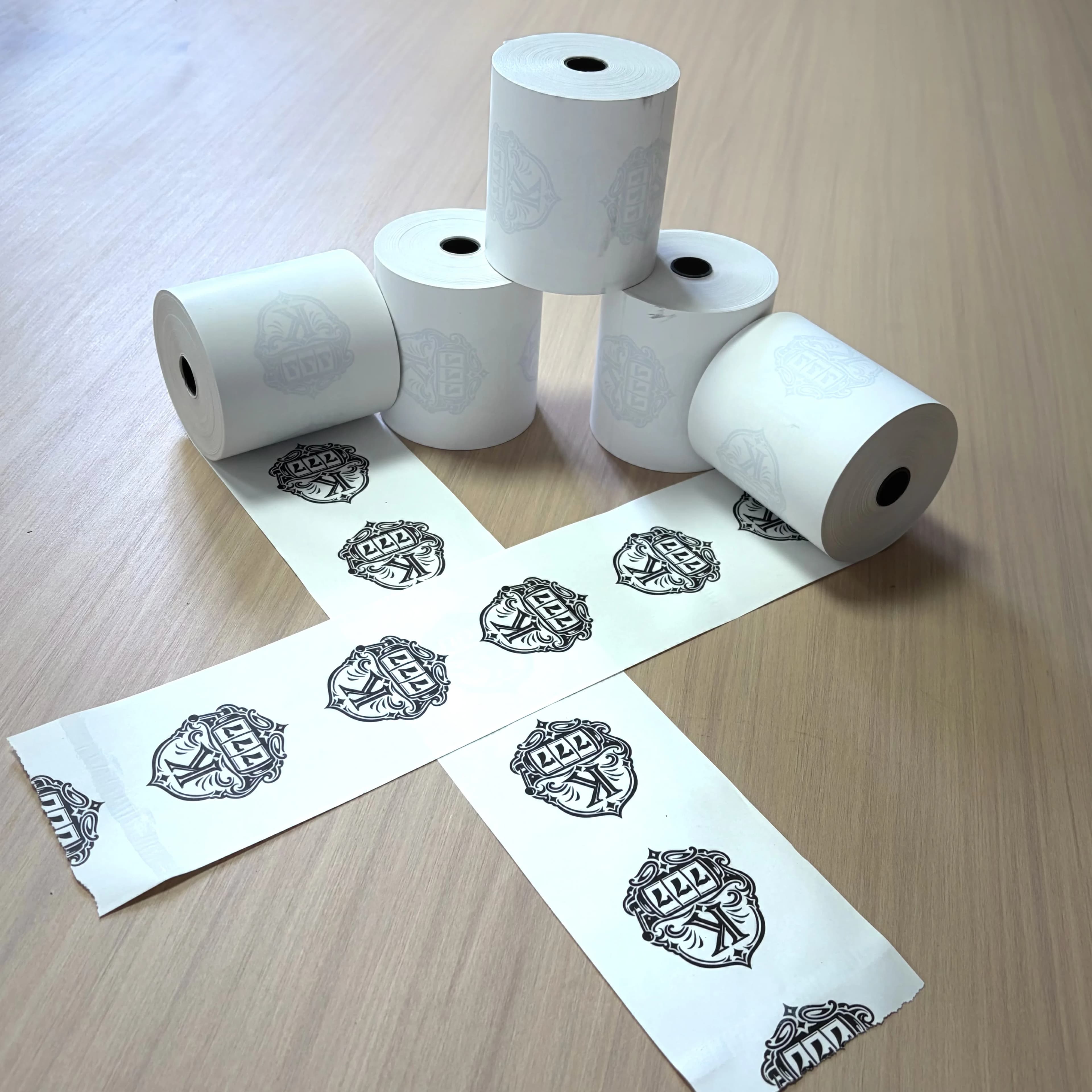
Arabic-English Custom Receipt Paper: Artwork and Proofing Checklist
A production checklist for GCC brands, POS integrators and distributors managing Arabic-English artwork, variable fields, QR clearance, winding and version approval.
Read article